

How to Choose a Natural Yellow Sapphire (Pukhraj): Ratti, Origin and Certification
Yellow Sapphire, known as Pukhraj in Hindi, is the gemstone of Jupiter (Guru) in Vedic astrology. Jupiter governs wisdom, wealth, education, fortune and marital happiness, which is why Pukhraj is among the most sought-after astrological gemstones. It is also one of the most commonly enhanced and imitated. This guide, from the House of Shubh Gems, India's most trusted name for natural gemstones for over 25 years, explains how to choose a genuine one.
What Is a Natural Yellow Sapphire (Pukhraj)?
Yellow Sapphire is a variety of corundum, the same mineral family as Ruby and Blue Sapphire. Its yellow colour comes from trace elements within the crystal. It ranks 9 on the Mohs scale, making it hard and durable enough for daily wear in a ring or pendant.
Traditionally, Pukhraj is worn to strengthen a weak or afflicted Jupiter. It is believed to support wisdom, financial growth, higher education, good judgement and a harmonious marriage. It is commonly recommended for those born under Sagittarius and Pisces, whose ruling planet is Jupiter, though the right gemstone always depends on your full birth chart.
Why Only Natural, Unheated and Untreated Pukhraj
Most Yellow Sapphires in the market are heated, and many are also diffused, dyed or fracture-filled to improve colour. A natural gemstone forms over millions of years, its atoms settling into an ordered crystal lattice. Heating uses very high temperatures and, in some processes, pressure or added chemicals. These can dissolve natural inclusions and disturb the gemstone's internal crystal structure.
In Vedic tradition, that structure is what allows a gemstone to carry planetary energy. When it is altered artificially, the gemstone is believed to lose its ability to channel cosmic energy effectively. For remedial use, a 100% natural, unheated, untreated Yellow Sapphire is therefore the correct choice. It is also rarer, shows honest colour and holds its value better.
6 Things to Check Before Buying a Yellow Sapphire
1. Certification. Insist on a report from an independent, trusted laboratory such as IGI, IIGJ or GIA. It should confirm the gemstone is natural and state clearly whether it is heated or unheated. Every Yellow Sapphire at Only Natural Gemstones is 100% natural, unheated and untreated, and comes with this certification.
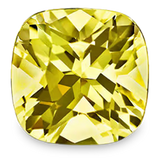
2. Colour. Look for a rich, vivid golden yellow. Pale, greenish or washed-out shades are generally less desirable. Very intense, evenly spread colour is usually a sign of a gemstone worth choosing, but confirm with the report, since colour alone cannot reveal treatment.
3. Clarity. Natural gemstones often contain tiny inclusions, and this is normal. Choose a gemstone that is eye-clean or nearly so. Avoid visible cracks, black spots or cloudy patches, which can affect both beauty and durability.
4. Origin. Yellow Sapphire is sourced from Sri Lanka, Thailand, Madagascar, Tanzania and Australia. Sri Lankan (Ceylon) Yellow Sapphire has long been valued in Vedic tradition for its clean, luminous colour. Ask for the origin to be stated, as it can affect price and rarity.
5. Cut. A well-cut gemstone shows even colour and good brilliance. Avoid gemstones that look dark or lifeless in the centre.
6. Weight in ratti. This is covered below.
How Many Ratti Yellow Sapphire Should You Wear?
Ratti is the traditional Indian unit of weight for gemstones. As a standard conversion, 1 ratti = 0.91 carat, so a 5 ratti gemstone weighs 4.55 carats.
For Yellow Sapphire, astrologers commonly recommend a weight of about 3 to 7 ratti, depending on your chart, the strength of Jupiter and your budget. A higher weight is not automatically better. The right weight is the one your astrologer advises, so consult before choosing.
How to Wear Yellow Sapphire
- Metal: Gold is the traditional choice. Panchdhatu (a five-metal alloy) and Ashtadhatu (an eight-metal alloy) are also widely preferred. They are more affordable and are considered equally good for the benefits of the gemstone.
- Finger: The index finger, commonly of the right hand.
- Day and time: A Thursday morning, during Jupiter's hora, is the traditional time to begin wearing it.
- Setting: Choose an open-back setting so the gemstone touches the skin.
- Preparation: Many wearers cleanse the gemstone and chant a Jupiter mantra before wearing it for the first time.
Yellow Sapphire vs Citrine
Citrine is a natural Upratna, or affordable alternative, for Jupiter. It offers a similar golden colour at a much lower price, but it is a different gemstone, softer and less rare. If Pukhraj is beyond your budget, ask your astrologer whether Citrine suits your chart.
If budget is a concern, you can first choose a natural Yellow Sapphire in a Panchdhatu or Ashtadhatu setting, before considering an Upratna such as Citrine.
Frequently Asked Questions
Who should wear a Yellow Sapphire?
It is traditionally recommended when Jupiter is weak or afflicted in the birth chart, and often for Sagittarius and Pisces natives. A qualified astrologer should confirm this from your Kundli.
How can I identify an original Pukhraj?
Ask for an independent laboratory report from IGI, IIGJ or GIA. The report confirms whether the gemstone is natural and whether any heating or treatment is present.
Which finger and metal are best for Yellow Sapphire?
The index finger, on a Thursday morning, with an open-back setting. Gold is the traditional metal, while Panchdhatu and Ashtadhatu are more affordable options that are equally good for benefits.
How many ratti should a Yellow Sapphire be?
Commonly 3 to 7 ratti, as advised by your astrologer. One ratti equals 0.91 carat.
Why is unheated Yellow Sapphire recommended?
Heating uses high temperatures that can disturb the gemstone's internal crystal structure. Tradition holds that this weakens its ability to carry planetary energy, so unheated gemstones are advised.
Shop Natural Yellow Sapphire (Pukhraj)
Explore our collection of certified natural Yellow Sapphires, from the House of Shubh Gems, and choose with confidence.
Buy only natural. Buy only certified.
Sourced with Care. Chosen for Purpose. Delivered with Trust.