

Pearl (Moti) Types Explained: South Sea, Basra, Keshi, Golden South Sea and Black Tahitian
Pearl (Moti) is the gemstone of the Moon (Chandra) in Vedic astrology, traditionally worn for a calm mind, emotional balance and restful sleep. Unlike other gemstones, a pearl is grown by a living oyster, and it comes in several very different types. This guide, from the House of Shubh Gems, India's most trusted name for natural gemstones for over 25 years, explains all five types we offer so you can choose with confidence.
Natural, Cultured and Keshi: What Is the Difference?
- Natural pearl: Formed in the wild without any human intervention, entirely of nacre.
- Cultured pearl: A technician implants a small bead nucleus, and the oyster coats it in nacre over the following years.
- Keshi pearl: A pearl with no bead nucleus, formed as a by-product of the culturing process and made entirely of nacre.
All five pearls in this guide are saltwater pearls. Only the Basra pearl is a wild natural pearl, and the others are saltwater cultured pearls with natural nacre grown by the oyster.
1. Basra Pearl
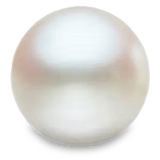
The Basra pearl is a natural pearl from the Persian Gulf, formed by the Gulf pearl oyster (Pinctada radiata) without human intervention. The name comes from the port of Basra, through which Gulf pearls were traded to India and beyond. Pearl fishing in the Gulf has declined sharply, so genuine Basra pearls are rare, and many are older stock. They are often slightly irregular in shape, with a creamy white or faint pink tone. In tradition, Basra pearls are regarded as the most potent form of Moti.
2. South Sea Pearl
South Sea pearls are grown by the silver-lipped oyster Pinctada maxima in the warm waters of Australia, Indonesia and the Philippines. They are among the largest pearls in the world, typically 8 to 20 mm, in white, silver and champagne shades. Their thick nacre gives a soft, satiny glow rather than a sharp mirror-like shine. They are bead-nucleated cultured pearls.
3. Golden South Sea Pearl
Golden South Sea pearls come from the gold-lipped variety of Pinctada maxima, mainly in the Philippines and Indonesia. Their warm golden colour is natural to the oyster, with the deeper golds most prized. In our astrological framing, the Golden South Sea pearl is associated with the combined energies of the Moon and Jupiter.
4. Black Tahitian Pearl
Tahitian pearls are grown by the black-lipped oyster Pinctada margaritifera in French Polynesia. Despite the name, they are rarely truly black. Natural colours range from grey and silver to brown, aubergine and peacock green, typically in 8 to 16 mm. They are bead-nucleated and take about 18 to 24 months to grow. In our astrological framing, Black Tahitian pearl is associated with the Moon and valued for protection.
5. Keshi Pearl
Keshi means "poppy seed" in Japanese. These non-nucleated pearls form accidentally during culturing, for example when an oyster rejects the bead. Because they are made entirely of nacre, keshi pearls are known for exceptional lustre and free-form, baroque shapes. They are usually small, though those from South Sea and Tahitian oysters can grow larger. Trade bodies classify them with cultured pearls.
Treatments and Certification
Pearls can be treated too. Bleaching, dyeing, irradiation and coating are used on many pearls in the market, and dyed dark pearls can imitate natural Tahitian colours. In Vedic tradition, only natural, untreated pearls are advised for remedial use, since treatments alter the pearl's natural condition.
Only a laboratory can tell whether a pearl is natural or cultured and whether it has been treated, using X-ray examination of its internal structure. Insist on a report from an independent, trusted laboratory such as IGI, IIGJ or GIA. Every pearl at Only Natural Gemstones is untreated and comes with this certification.
How to Choose Your Pearl
- Basra: for those who want a wild natural pearl, and who accept its rarity and price.
- South Sea: for a larger pearl with a soft, glowing lustre.
- Golden South Sea: for a warm golden colour and the Moon and Jupiter association.
- Black Tahitian: for a naturally dark pearl with protective symbolism.
- Keshi: for high lustre and a natural, organic shape.
Your astrologer's advice on your chart, and your budget, should guide the final choice.
How to Wear a Pearl
- Metal: Silver, the traditional metal of the Moon.
- Finger: The little finger of the working hand. Some astrologers advise the ring finger.
- Day and time: A Monday morning during Shukla Paksha, the waxing fortnight.
- Setting: An open-back setting, so the pearl touches the skin.
- Mantra: Many wearers chant "Om Chandraya Namah" 108 times before first wearing.
Pearls are organic and soft, so keep them away from perfumes and chemicals.
Frequently Asked Questions
Which pearl is best for the Moon in astrology?
Basra pearls are traditionally regarded as the most potent, but South Sea, Golden South Sea, Black Tahitian and Keshi pearls are all worn as Moon gemstones. Your astrologer can advise.
Is a South Sea pearl a natural pearl?
It is a saltwater cultured pearl. It grows inside an oyster from an implanted bead, but its nacre is made entirely by the oyster.
What is the difference between Basra and Keshi pearls?
A Basra pearl forms in the wild with no human involvement. A Keshi pearl forms without a bead as a by-product of pearl farming.
Are Black Tahitian pearls really black?
Rarely. Their natural colours range from grey and silver to brown, aubergine and peacock green.
How can I check that a pearl is natural and untreated?
Ask for an independent laboratory report. X-ray examination identifies whether a pearl is natural or cultured, and testing reveals treatments.
Shop Certified Natural Pearls
Explore our collection of saltwater pearls, from the House of Shubh Gems, each with an independent laboratory report.
Buy only natural. Buy only certified.
Sourced with Care. Chosen for Purpose. Delivered with Trust.